Evidence before claims
Every capability figure is tied to a source, an evidence level and a review date. Marketing maximums from different product series are never merged into one capability package.
ChinaPCB.org lists PCB and PCBA factories in mainland China, checked one by one: the legal entity that invoices you, the address that actually runs the line, and the process each one can prove. Read the profile, then contact the factory directly — no agent in between.
Every profile is organised around the five things a buyer actually compares — layer count, base material, surface finish, certification and MOQ — and each figure carries the source it came from and the date it was last checked. Where something could not be checked, the field says so instead of being filled in with a plausible number.
When a profile answers your question, you write to the factory yourself. No agent in between, and no request form that goes nowhere.
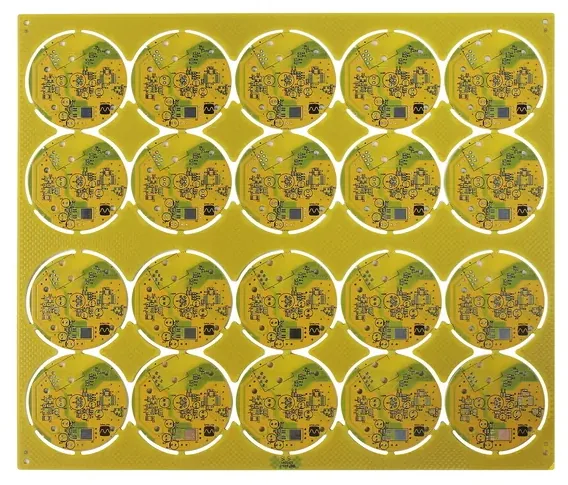
What a buyer is comparing is rarely a catalogue photo. It is a panel utilisation, a finish that survives assembly, and a line that can repeat it next month.
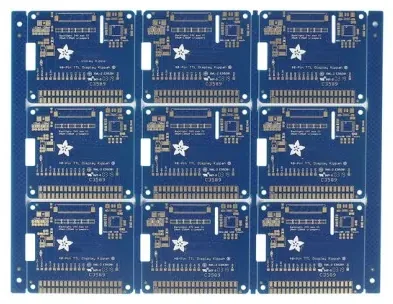
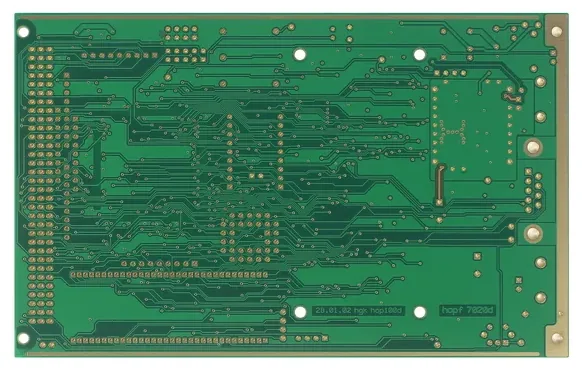
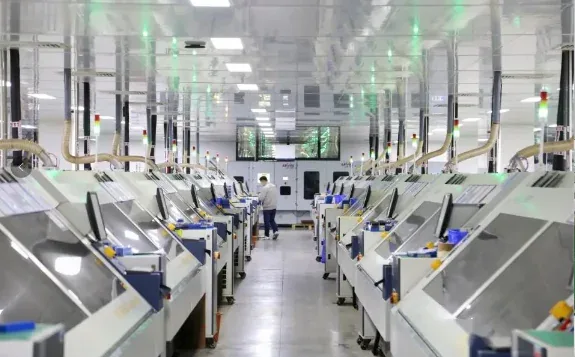
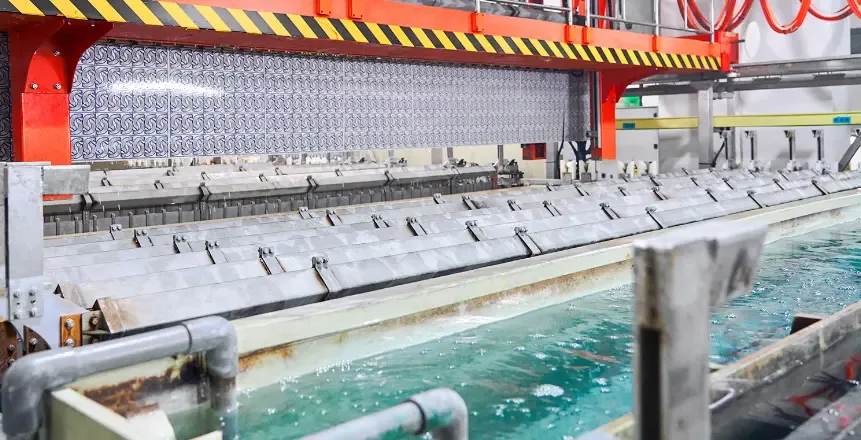
Photographs on this page illustrate PCB fabrication and assembly. They are not tied to any single listing in the directory, and a profile is never illustrated with a photo of another company's plant.
A profile that cannot answer one of these says so on the page. That is the point of the directory: the gaps are visible too.
Every capability figure is tied to a source, an evidence level and a review date. Marketing maximums from different product series are never merged into one capability package.
A group parent, a trading company and a manufacturing subsidiary are three different things. We build a profile around the entity that actually makes the boards.
Company names, certificate numbers, capacities and lead times are only published after they are checked. Unconfirmed fields stay visibly unconfirmed.
Four sourcing problems a profile answers before the first email: who invoices you, which site runs the line, what the minimum order really is, and whether the reply comes from the factory.

I spent two years quoting six-layer boards off a trade-show list. The part that helped was unglamorous: invoice entity and plant address on the same page, in the same place. Two of the three suppliers I had been talking to turned out to be trading companies. A sales call would not have told me that.

Four to six layers, small runs, and half the factories stop answering once they hear the volume. I used the MOQ figure to cut the list to nine, then read four of them properly. That took an afternoon instead of the three weeks I had budgeted for it.

The certificate is never the problem. The file number checks out. What nobody puts in writing is which site the file actually covers, and it is often not the site your order will run on. Seeing that answered before the first meeting changes what I ask in the first meeting.

I wanted to stop being the lead in somebody else’s funnel. Read the profile, write to the factory, hear back from the factory. No form, no ‘your enquiry has been received’, no four agents forwarding the same drawing to each other until the tolerances are gone.
A factory that builds multilayer boards well is not automatically an HDI or rigid-flex factory. Start with the process you actually need.
Metal-core boards that use an aluminum base plate to move heat away from components, common in LED lighting and power conversion.
Open the categoryCircuits built on flexible polyimide film that can be bent or folded, used where a rigid board or a cable harness will not fit.
Open the categoryHigh density interconnect boards built with build-up dielectric, laser-drilled microvias and fine lines instead of only mechanically drilled through vias.
Open the categoryBoards built on low-loss RF laminates where dielectric constant, dissipation factor and impedance consistency drive performance.
Open the categoryBoards built on laminate whose glass transition temperature is high enough for lead-free assembly and repeated thermal cycling, specified by grade rather than by a factory name.
Open the categoryBoards built on an aluminium, copper or iron base, where the metal is part of the thermal design rather than just a carrier.
Open the categoryThree or more copper layers bonded into one stack. The layer count describes the press; the aspect ratio, registration and impedance tolerances describe whether the board can be built and drilled.
Open the categorySingle-sided, double-sided and multilayer boards on rigid laminate. The directory files 63 factories here, and 59 of them also sit under multilayer.
Open the categoryTwo rigid stacks bonded either side of a flex core, laminated into one board. The directory files 58 factories here, and 31 of them describe the construction in a capability row.
Open the categoryPublic information can confirm that a company exists, that a UL file names a holder, and that a capability was published. It cannot, on its own, prove that a factory owns every production line it advertises. We separate those claims instead of blurring them together.
Follow one quotation cell through 1,252 capability rows: 1,126 label forms, 100 rows with two units, and a five-line RFQ that survives the sample column.
Read the guideAn E-number identifies a file, not your order. Three mismatches found in 131 profiles: holder, recognised site and construction scope, with a record to copy.
Read the guideISO 14001 is not a discharge permit. What 131 profiles publish, how the permit number names a site, and four attachments to ask for when records are missing.
Read the guideTwenty-three quote types, 186 parameters and five gates an RFQ must pass before replies can be compared line by line, plus what a missing field changes.
Read the guideCloud PCB design security does not end at the platform boundary. Five vendor answers, then what 131 Chinese factory records show about the handoff.
Read the articleOne MPN, one symbol, one footprint in the library. At the factory the part acquires a second identity, and no profile publishes the rules for the swap.
Read the articleEvery published profile carries one of four evidence levels and a review date. We check public records such as the business registry and UL files, but a listing is not a guarantee of factory ownership or in-house production.
No. A website statement alone does not prove factory ownership or that manufacturing is performed in-house. We record which steps a factory says it owns and state clearly when that claim has not been independently checked.
Email one technical package to [email protected]. The RFQ checklist lists the board data, materials, acceptance terms and supplier identity fields that make the replies comparable.
Yes. Send the profile URL, the field and a primary source to [email protected]; the correction is recorded on the profile together with its review date. The same contact is published on the about page.
Ready to shortlist? Email one technical package to [email protected], or start from the RFQ page and the RFQ checklist so every supplier quotes the same board.